Bijarim forest in Jeju: entry fee, how long it takes, and our barefoot walk
Bijarim is a nutmeg-tree forest in Gujwa-eup, Jeju. We walked it on Sunday, September 20, 2026, on day 2 of our trip. It took us 2 hours, because we walked it barefoot. In shoes, I think the full loop takes about an hour and a half. If you only walk the A trail, plan on 40 minutes to an hour.
The trees are Japanese nutmeg-yew, called bija in Korean. Rim means forest.
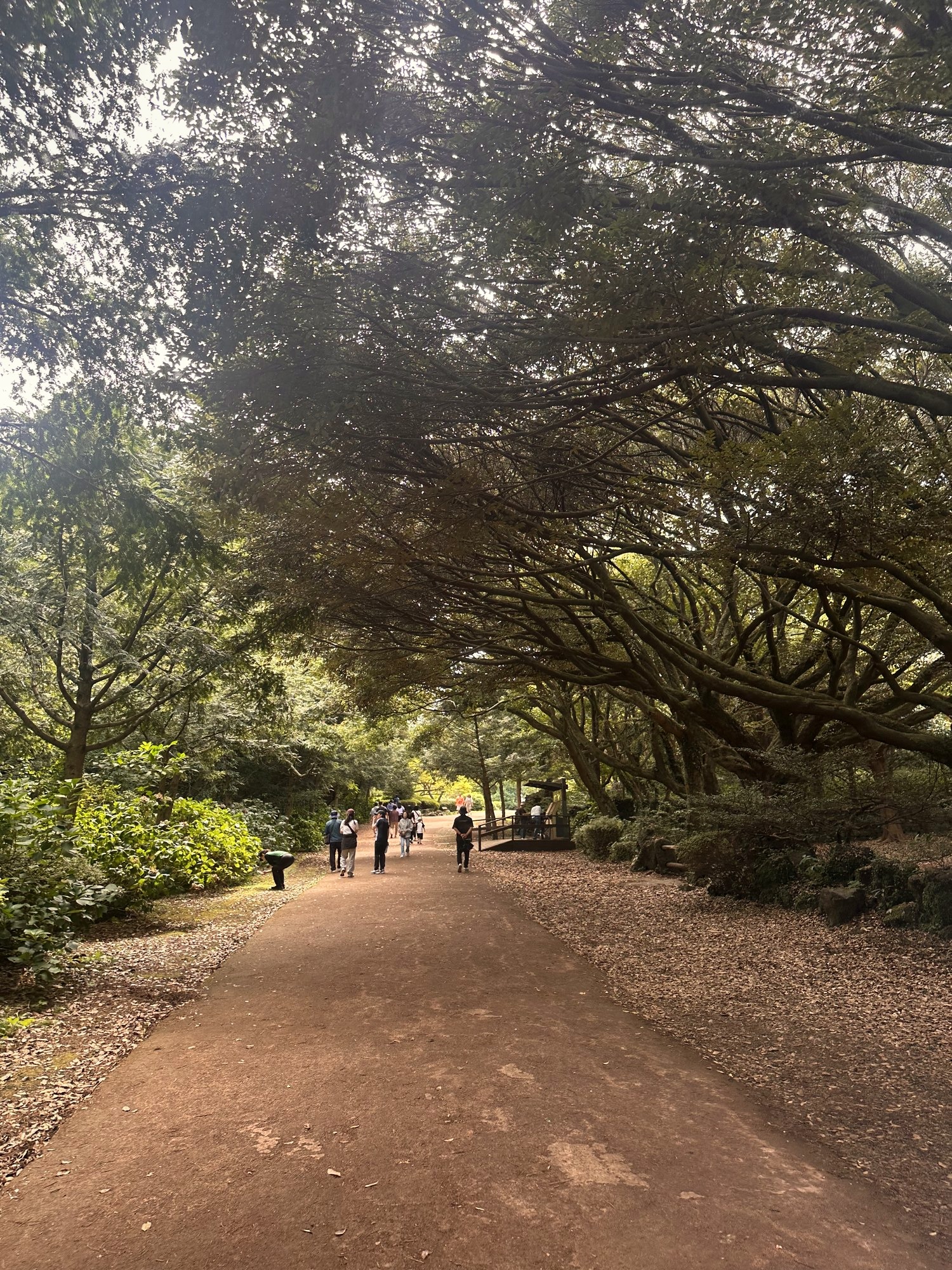
Contents
Quick facts
| Address | 55 Bijasup-gil, Gujwa-eup, Jeju-si |
|---|---|
| Entry fee | Adults 3,000 won; children and teens 1,500 won |
| Parking | We didn't pay for parking |
| Last entry | 5 p.m.; open every day of the year |
| Walking time | 2 hours barefoot (ours); about 1.5 hours in shoes (my estimate); A trail only 40 minutes to 1 hour |
Getting in: an unstaffed ticket booth
We had a late breakfast at Myeongjin Jeonbok in Pyeongdae and got to Bijarim around 1:10 p.m.
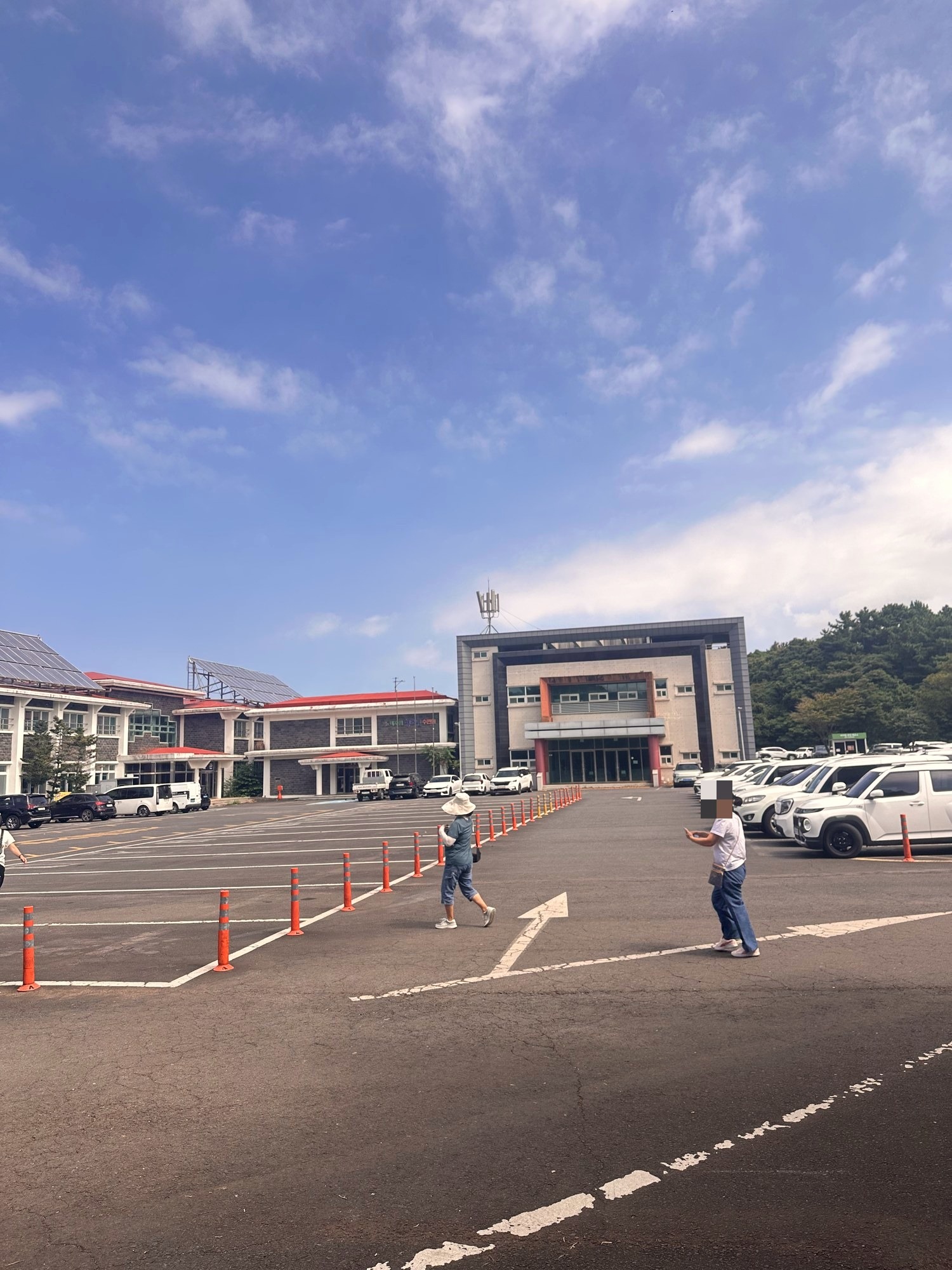
The parking lot is big, and we didn't pay anything to park.

You buy tickets from a machine at the unstaffed booth. It was 3,000 won per adult, so 6,000 won for the two of us.
Some visitors get in free: Jeju residents, Korean nationals aged 65 and over, and preschool children, among others. They go to the ticket window instead of the machine.

The banner inside the booth lists, for each group, which ID or family certificate to bring.
I thought it was an arboretum
At the entrance, I assumed Bijarim was an ordinary arboretum.
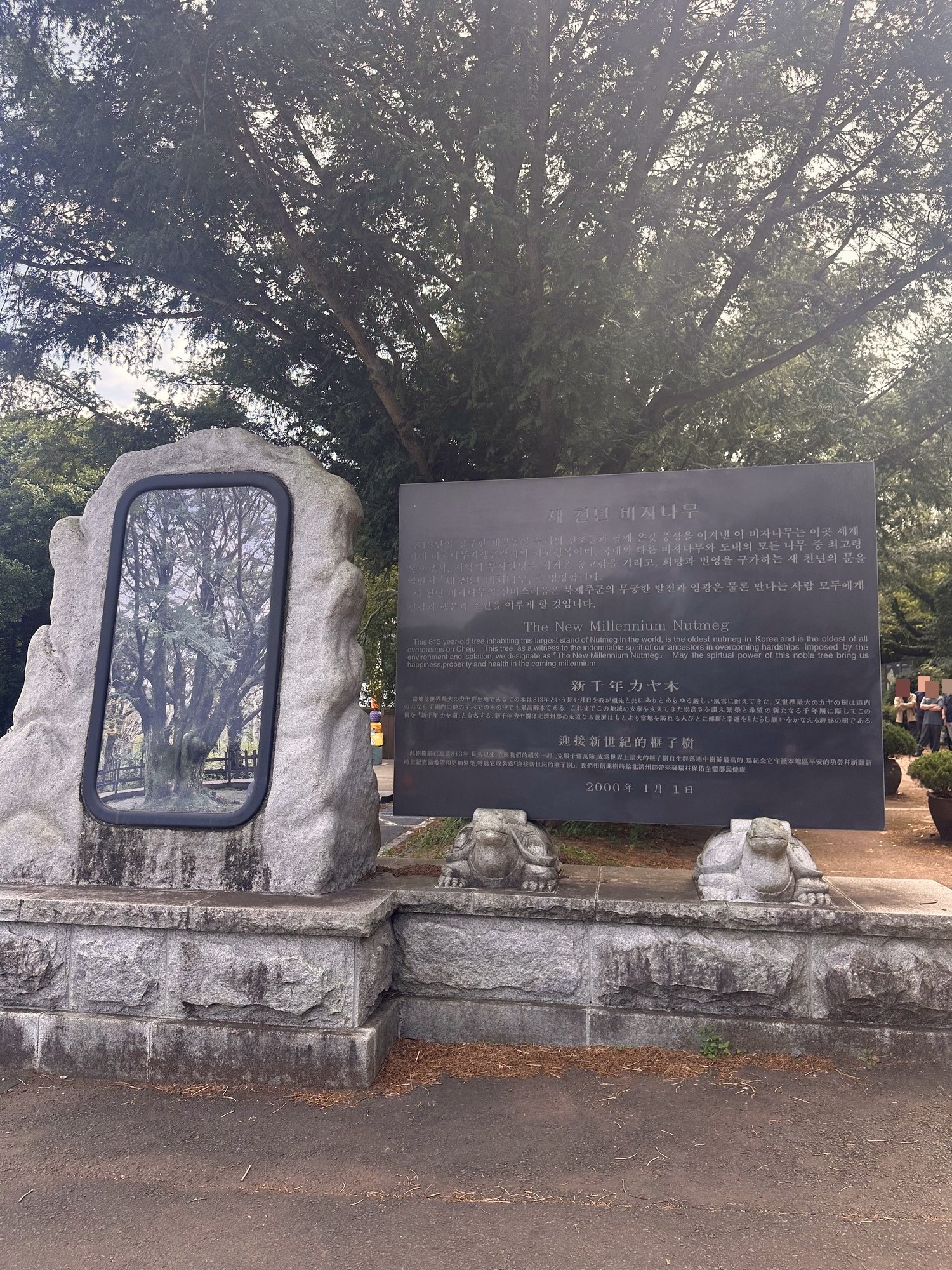
The stone near the entrance carries the name "New Millennium Nutmeg Tree" and the date January 1, 2000.
The farther we walked, the more that idea fell apart. The trees are huge. It felt like walking into a place full of ancient plants.
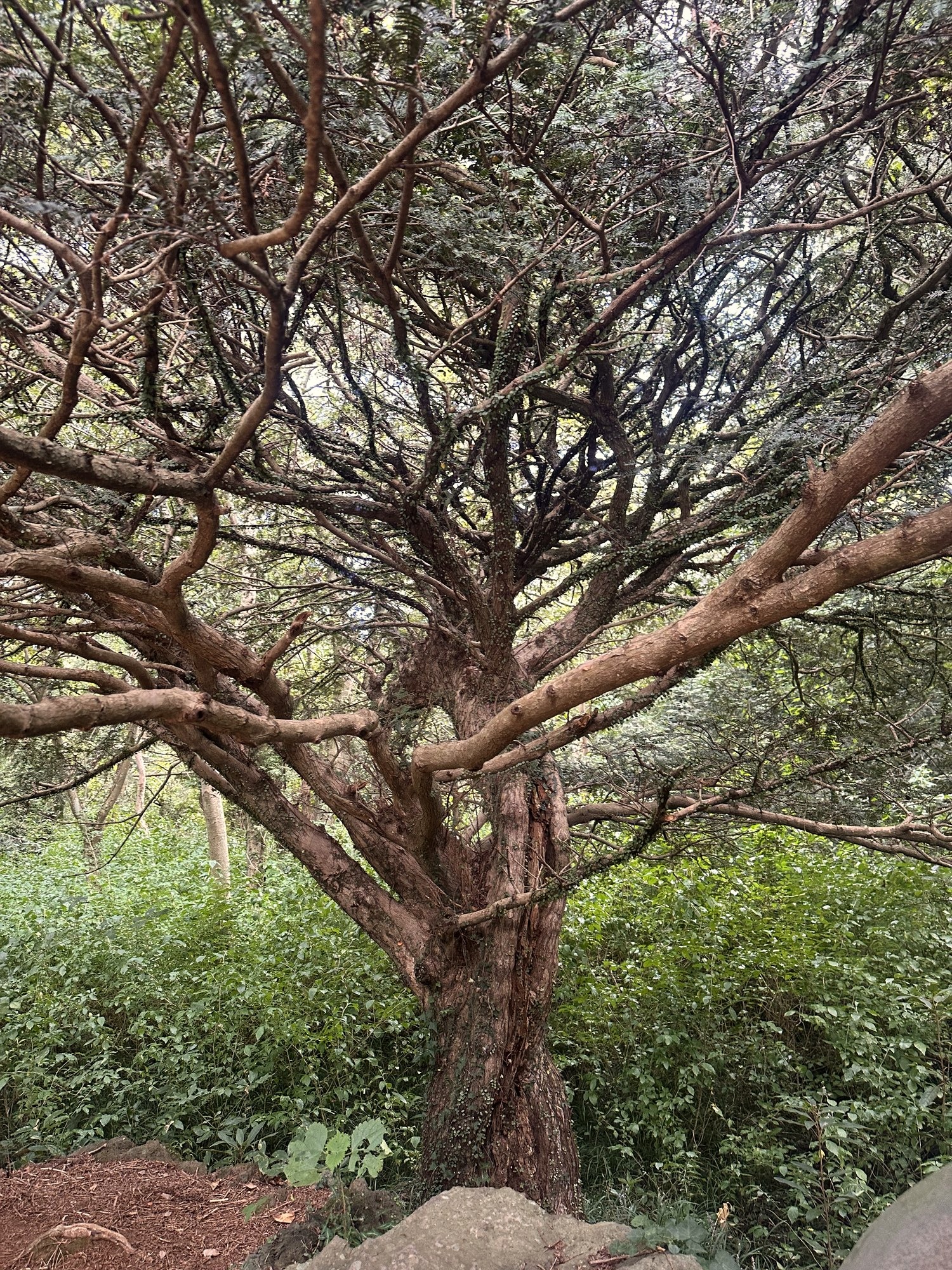
Not far from the entrance is a nutmeg tree that was struck by lightning. In Korea, a tree struck by lightning is said to drive away bad luck and give strong life energy, so I hope some of that reaches you too.
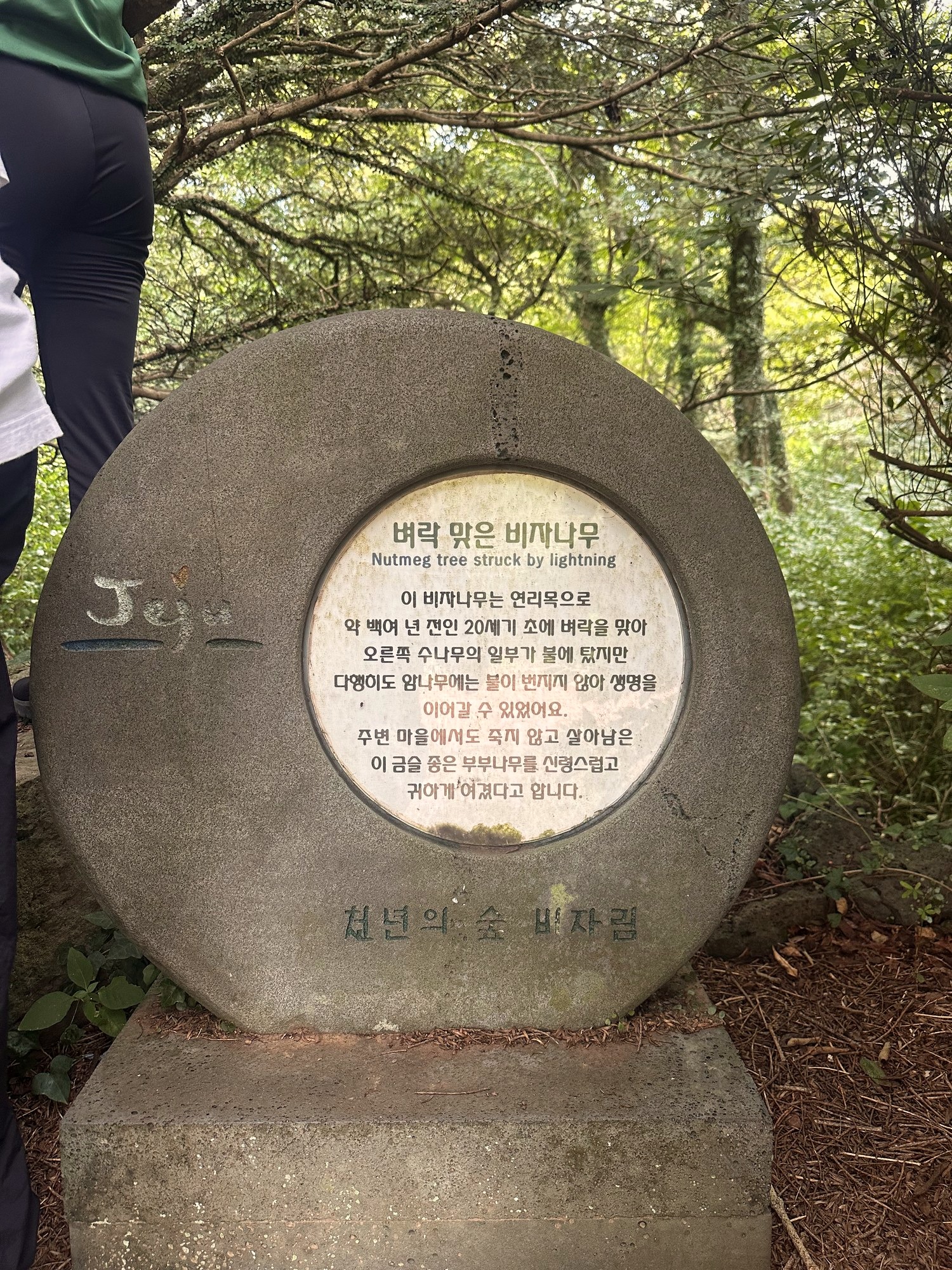
The stone sign says this is actually two trees grown together. Lightning hit it in the early 20th century and burned part of the male tree on the right, but the fire didn't spread to the female tree, so it lived on.
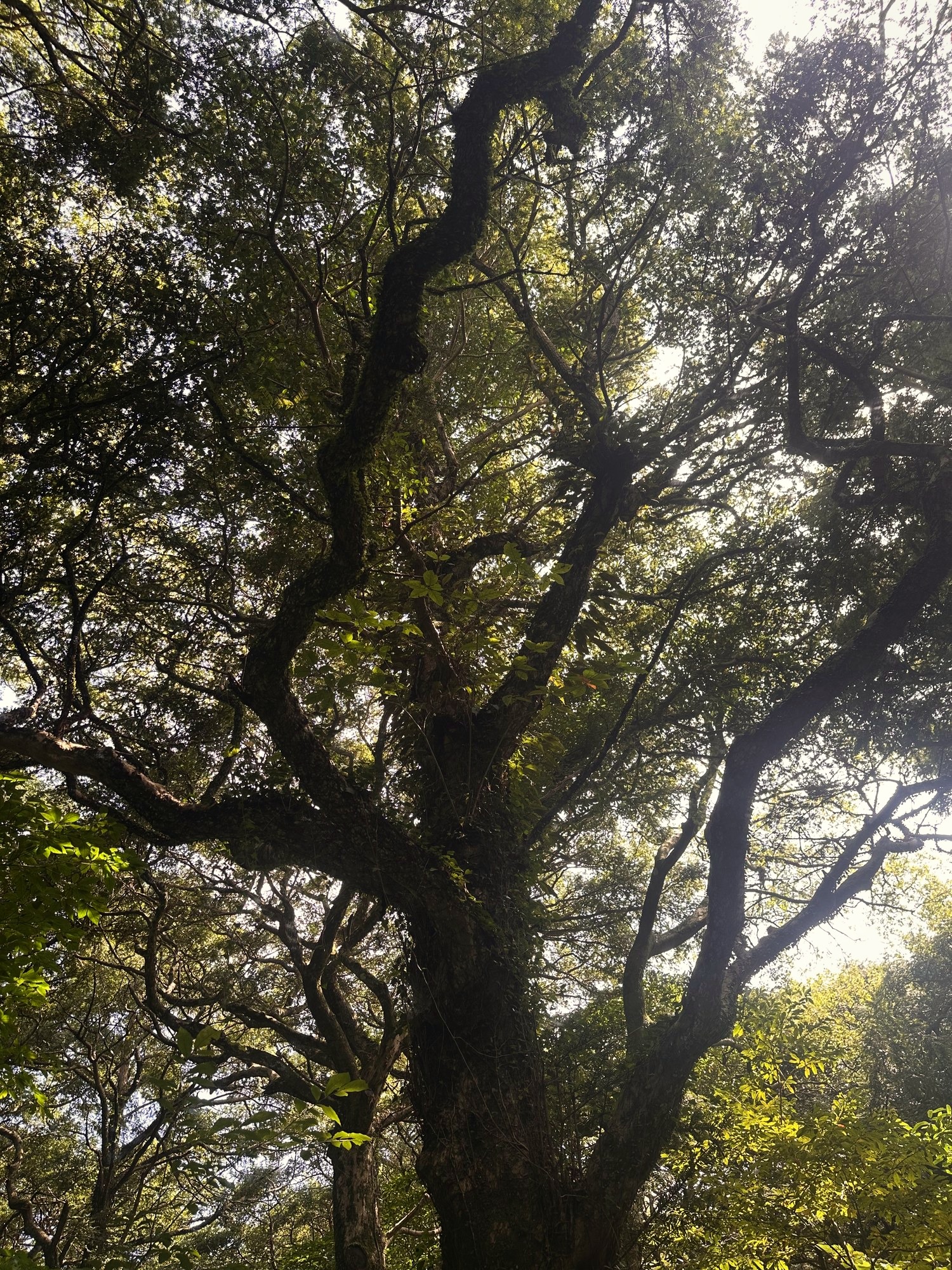
It really did feel grand and a little mysterious.
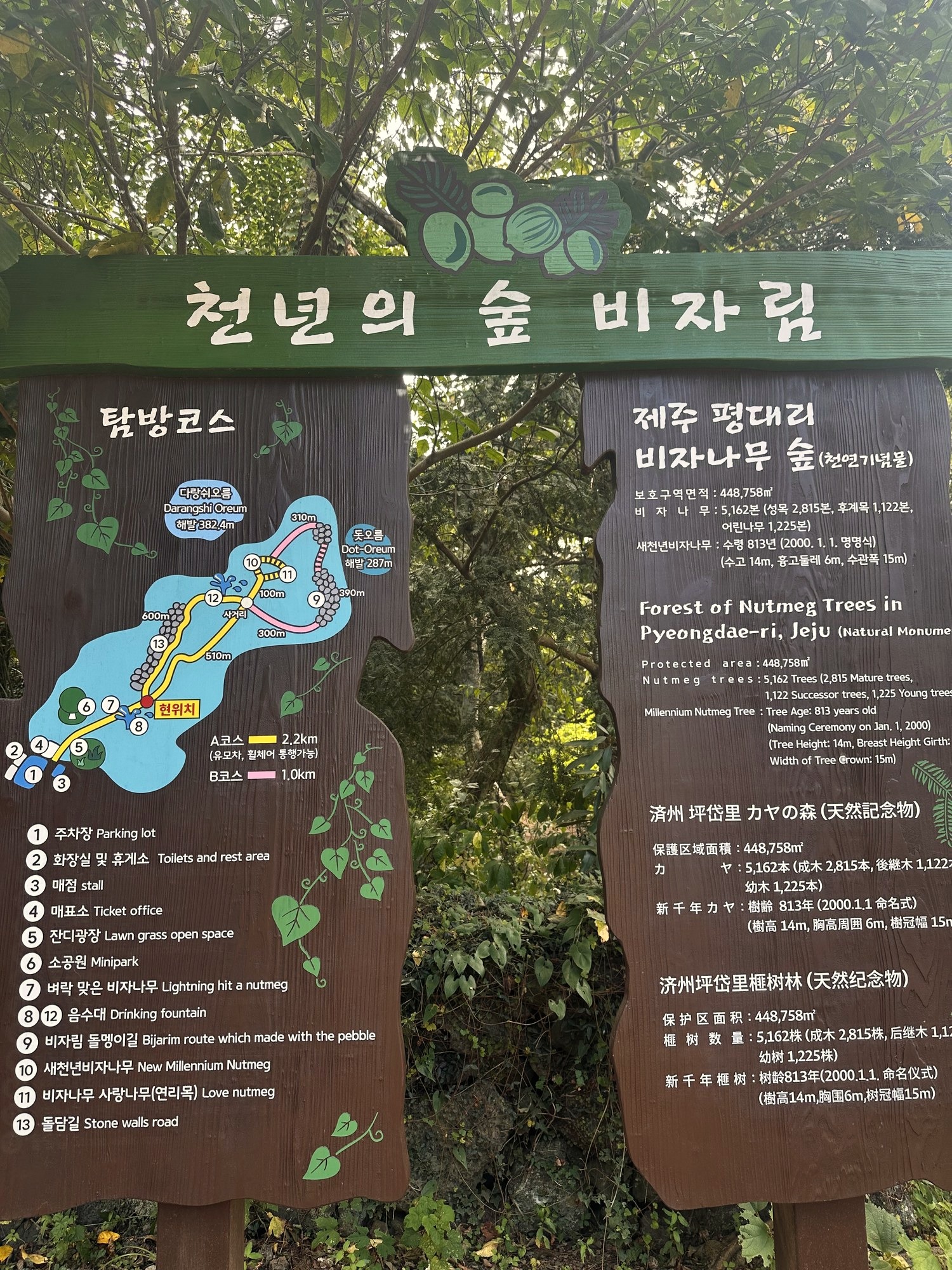
The information board says the forest is a Natural Monument of Korea, with a protected area of 448,758 square meters. It counts 5,162 nutmeg trees: 2,815 mature trees, 1,122 successor trees and 1,225 young trees.
What the guide told us
When we went in around 1:10 p.m., a guide happened to be giving a talk, so we followed along.
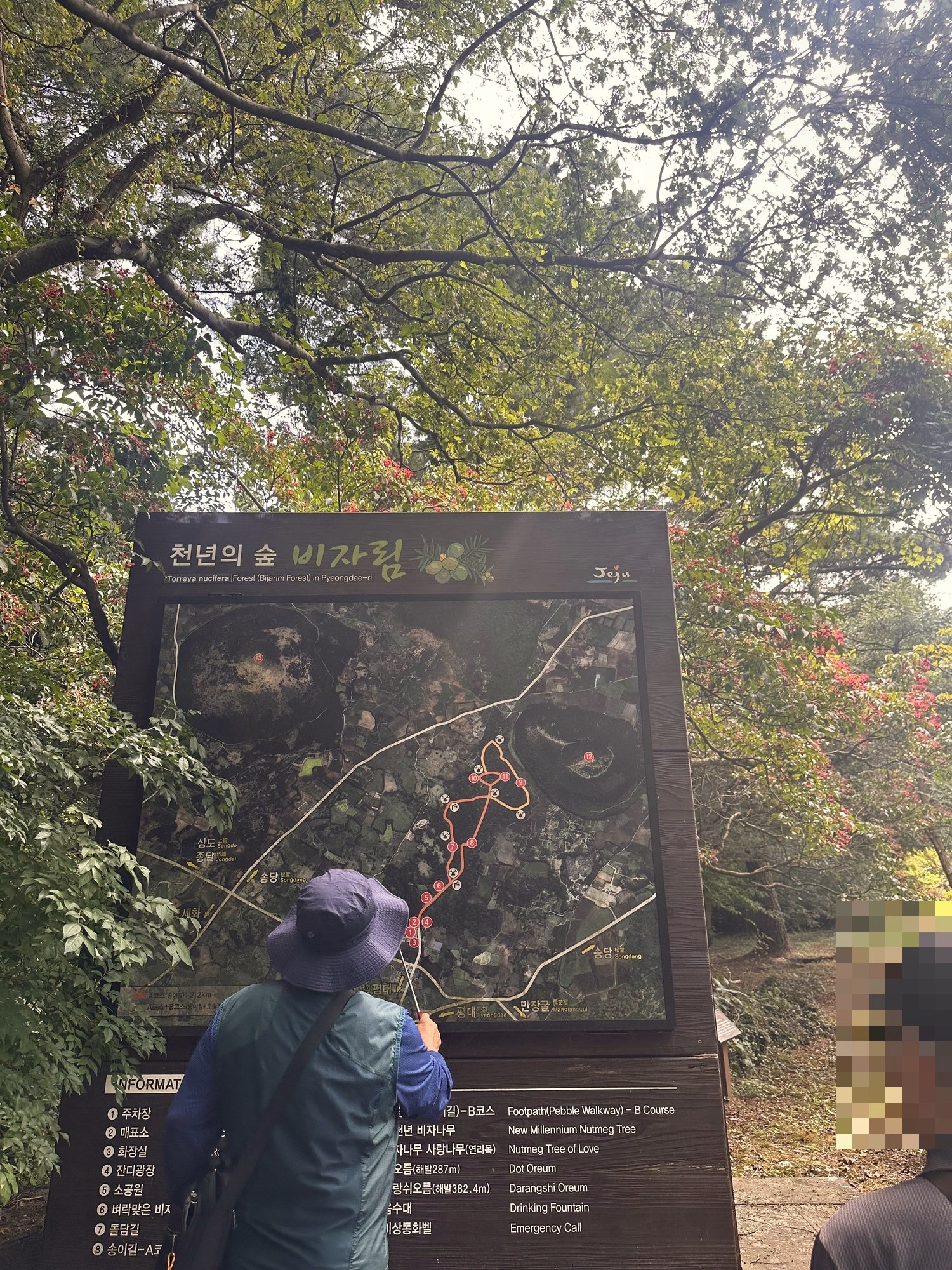
The talk made the forest much more interesting.
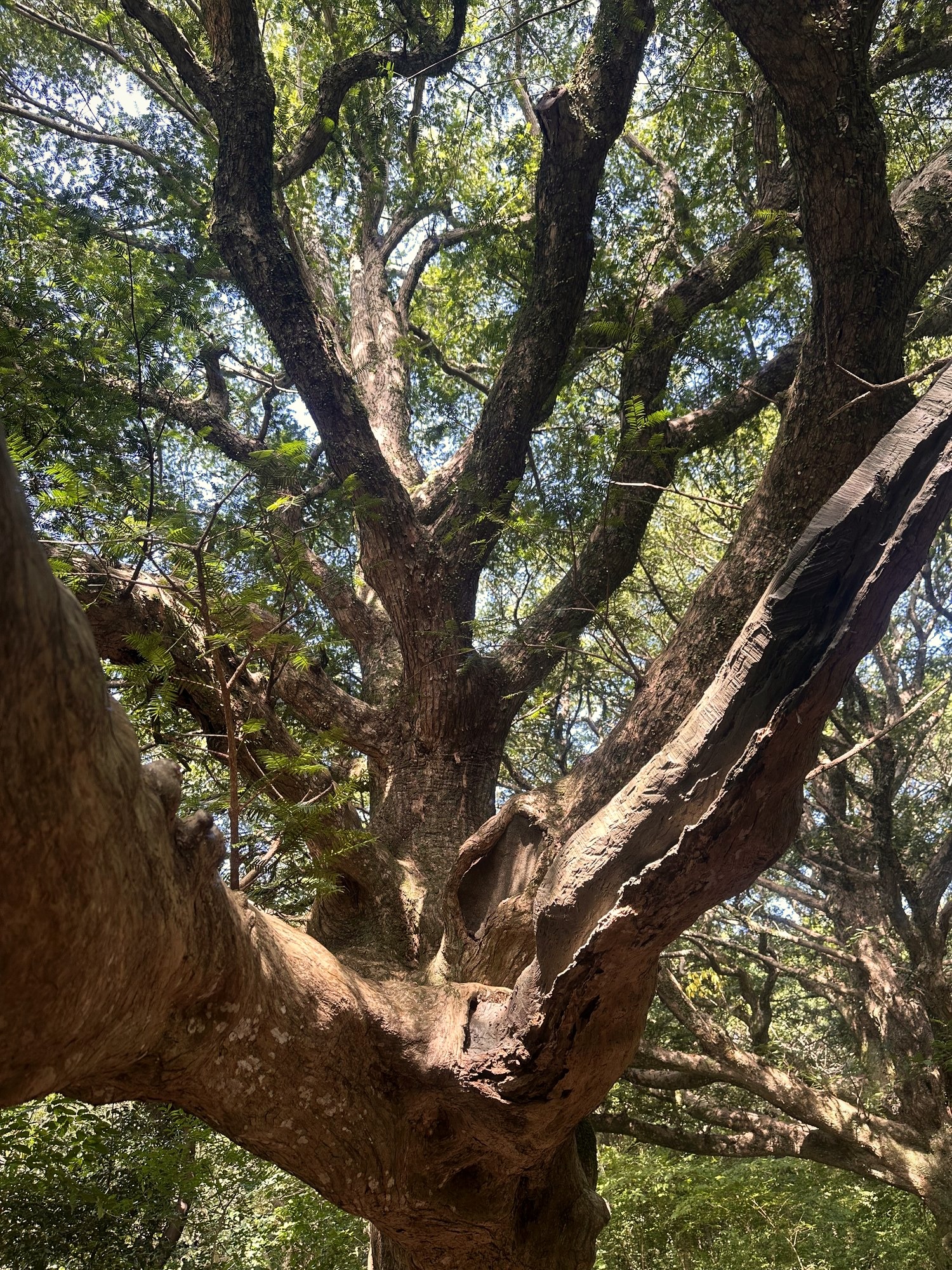
We heard about how the trees live, what they were used for, and that nutmeg trees come as separate male and female trees.
According to the guide, a nutmeg tree grows only about 1 mm a year, which is why there is no other old-growth forest of this size. The guide said there are about 2,800 mature trees, and that they are around 300 to 600 years old on average.
Abu Oreum, the small volcanic hill we climbed later that afternoon, was the guide's suggestion too.
Walking it barefoot was a mistake
The trail is covered in red volcanic scoria, hwasan songi in Korean. People say it's good for your body, so we took our shoes off and tried walking barefoot.
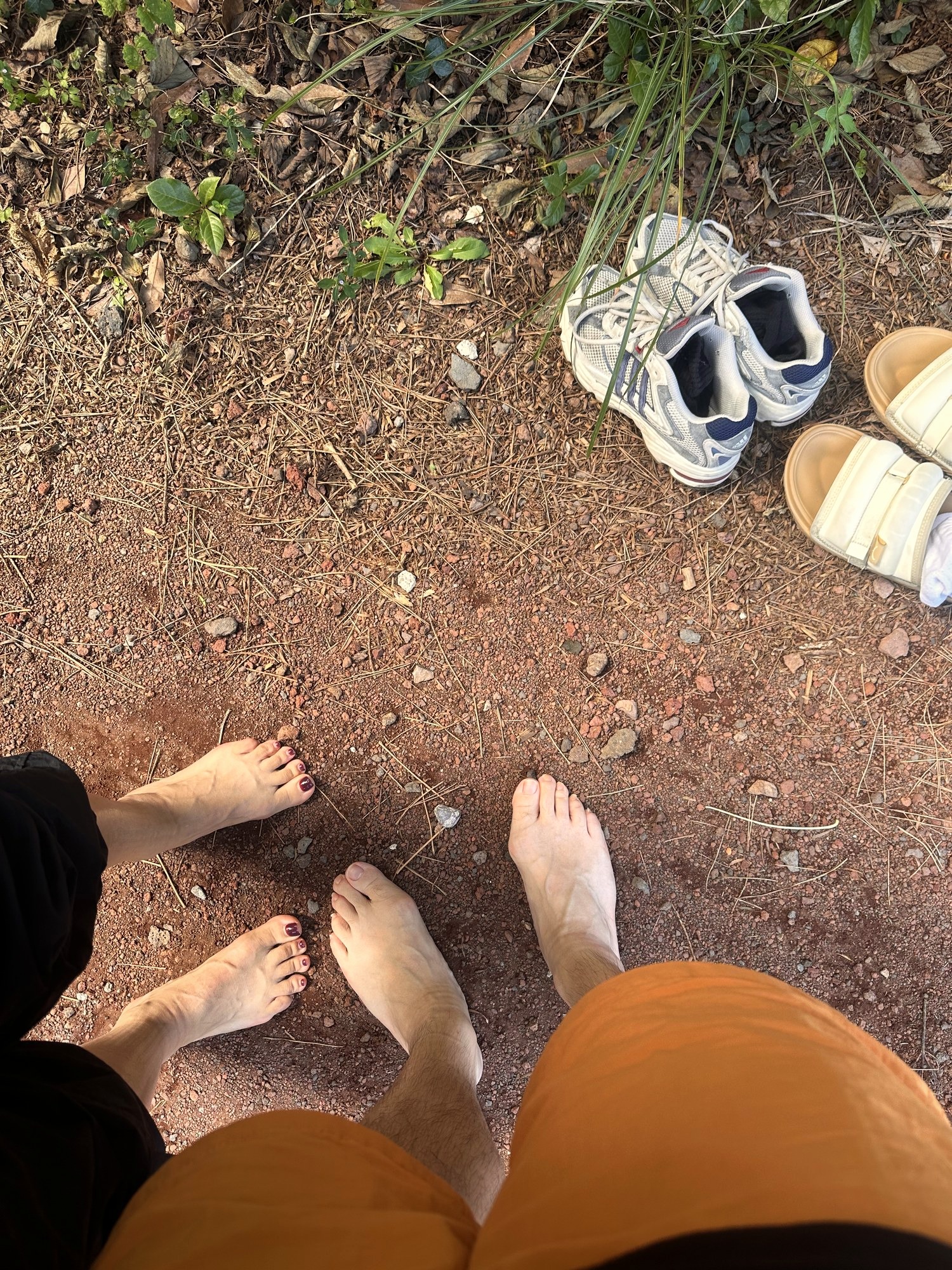
There are stones and bits of wood on the ground, and from that point on I was looking at the ground more than the forest.
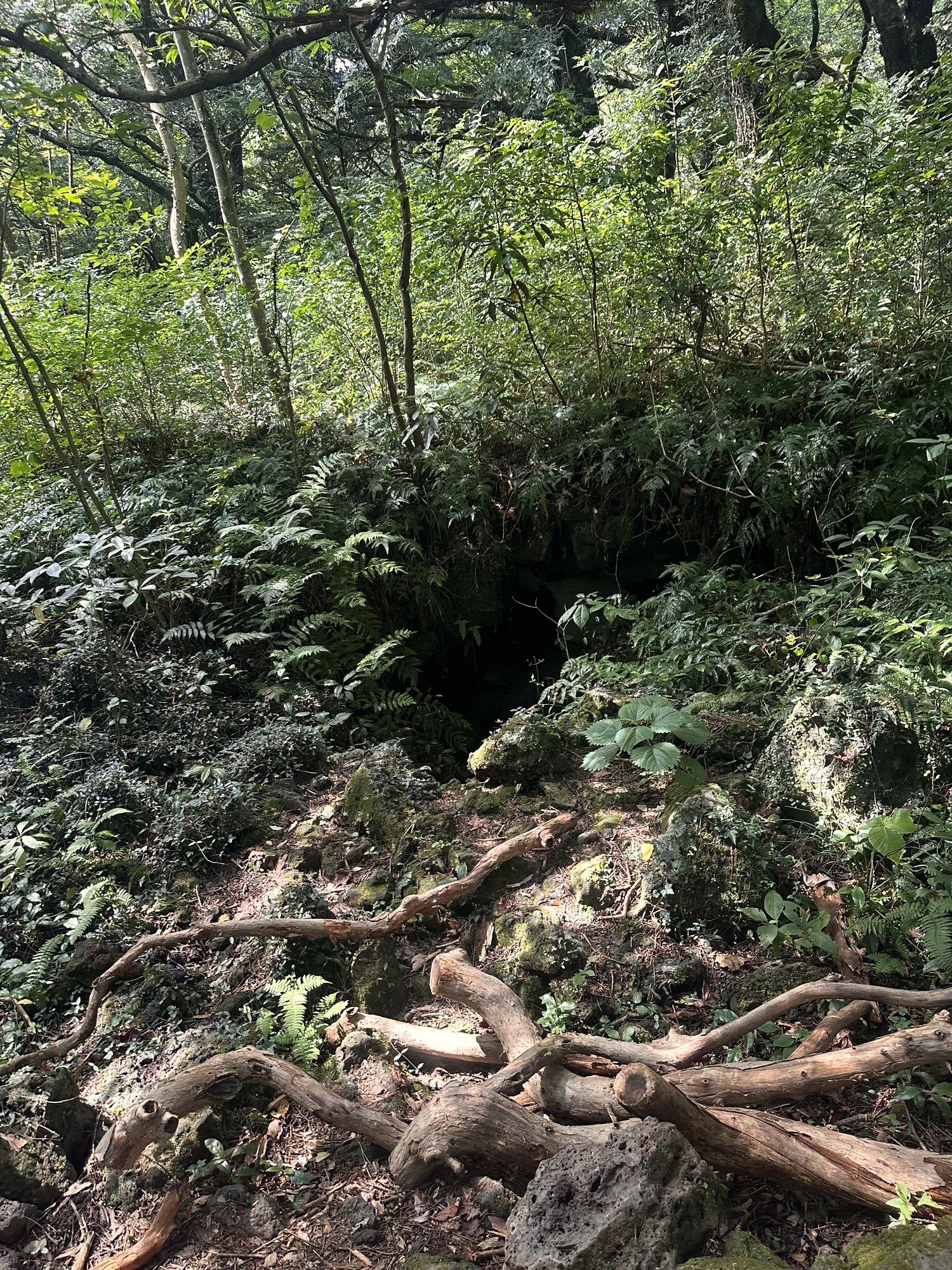
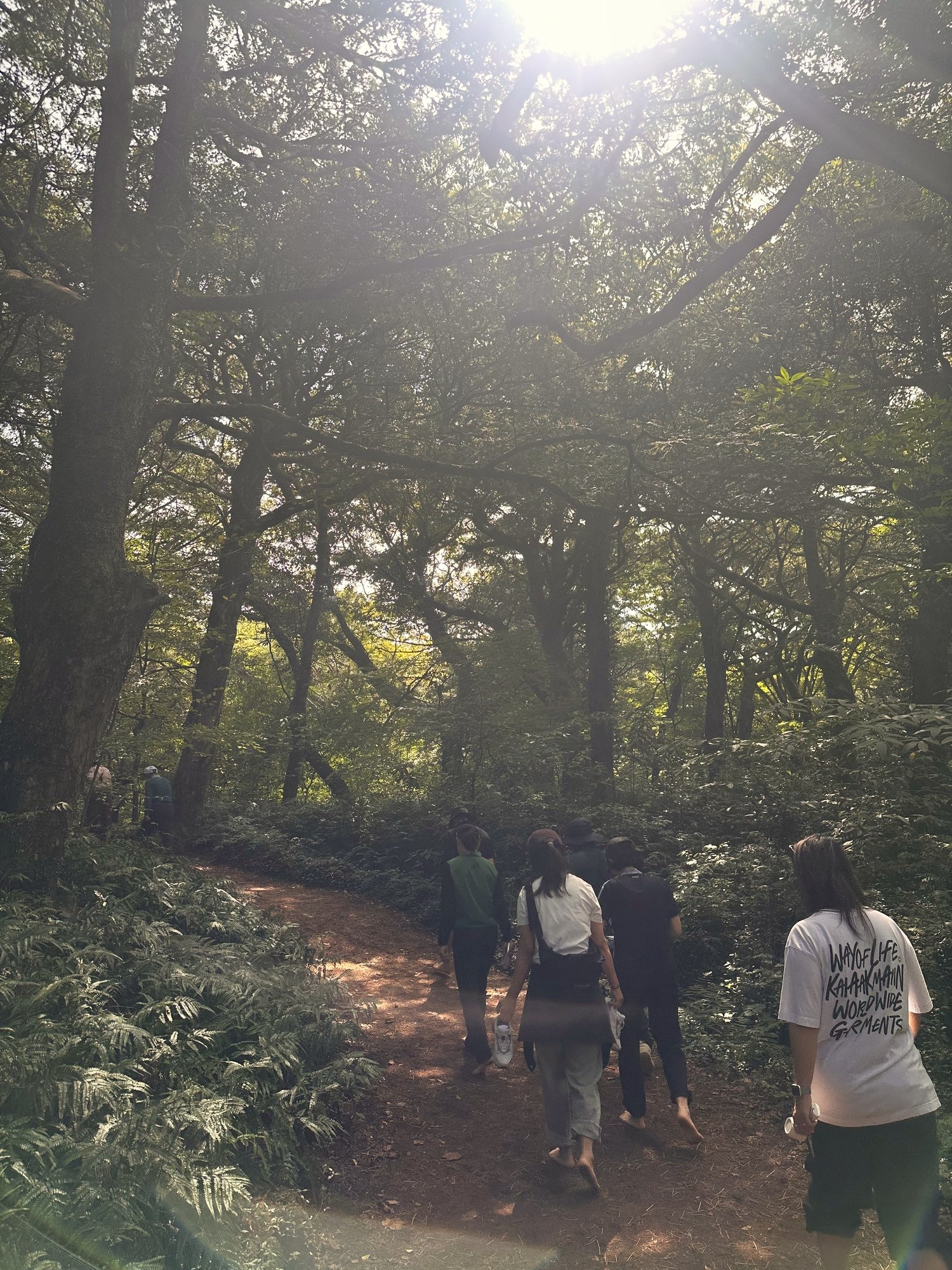
Plenty of other people were walking barefoot with their shoes in their hands.
Unless you walk barefoot often, keep your shoes on. Seeing shoes left at the entrance isn't a reason to try it.
Finding the named trees in the shade
It isn't only nutmeg trees. There are many kinds of trees, and the walk is pleasant just for looking around.
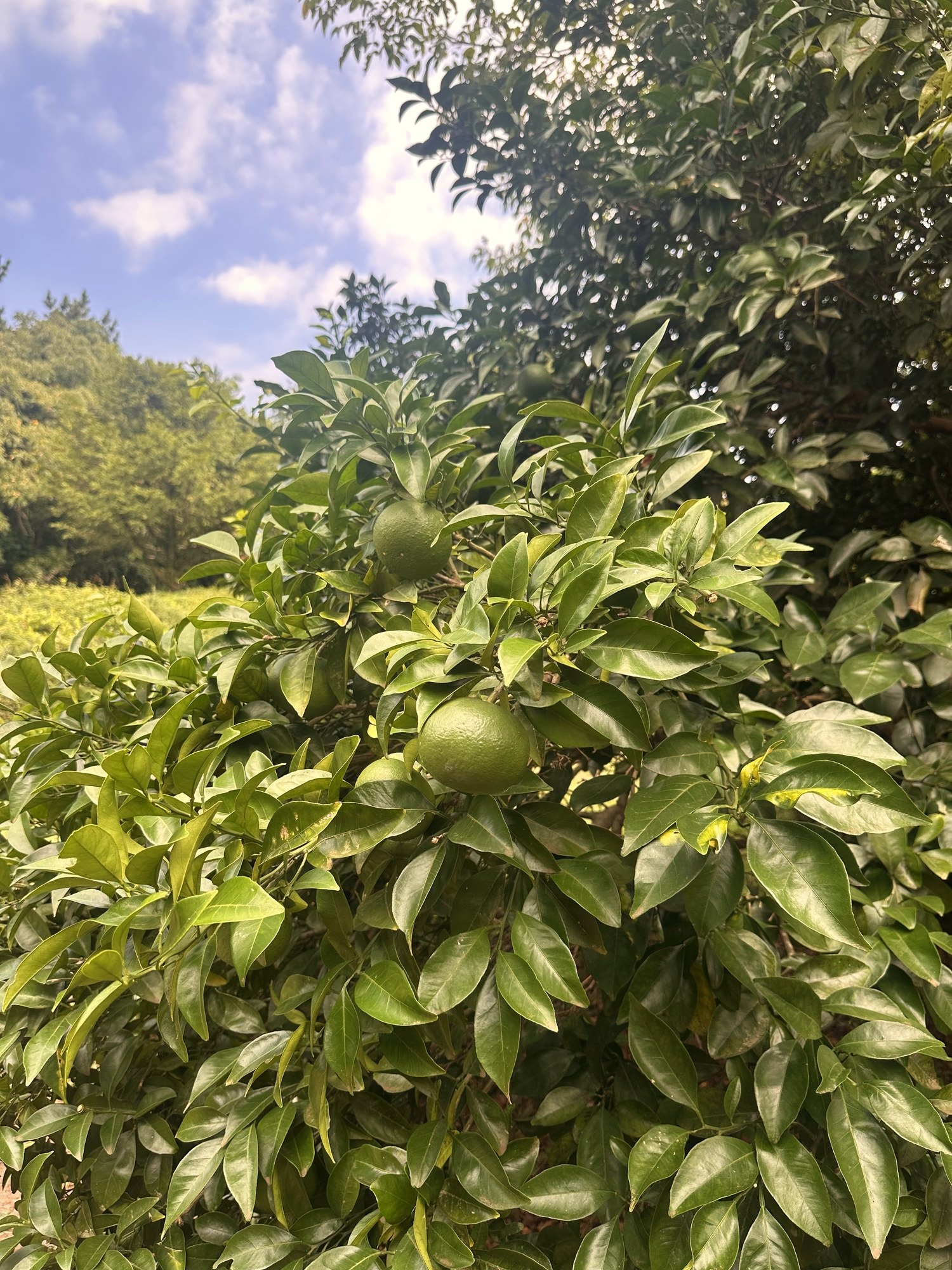
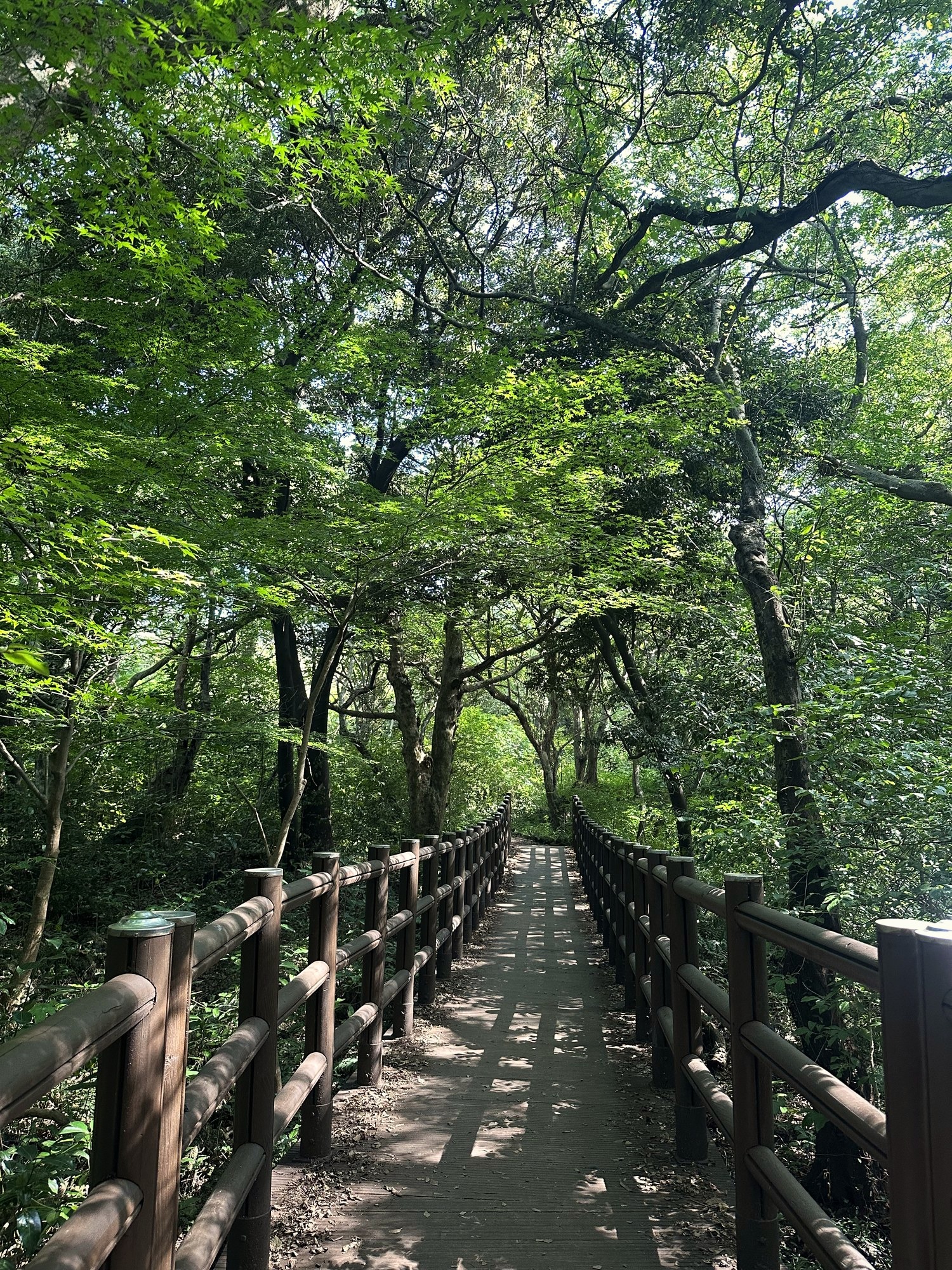
Walking in the shade and hunting for the named trees was part of the fun.
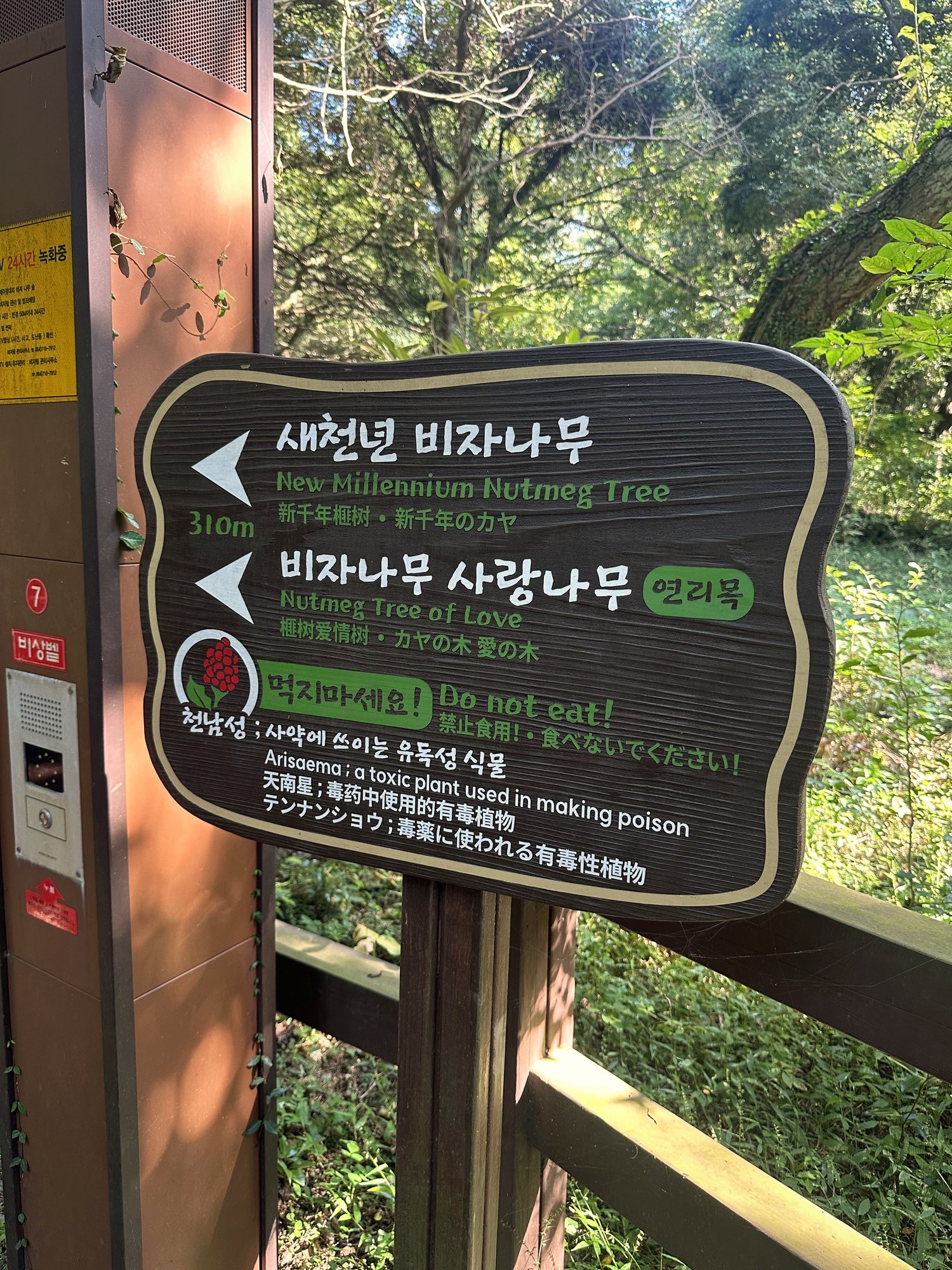
At this fork, the sign points to the New Millennium Nutmeg Tree (310 m) and to the Nutmeg Tree of Love.
The same sign warns that cheonnamseong, a plant growing here, is poisonous and was once used to make poison, so don't eat it.
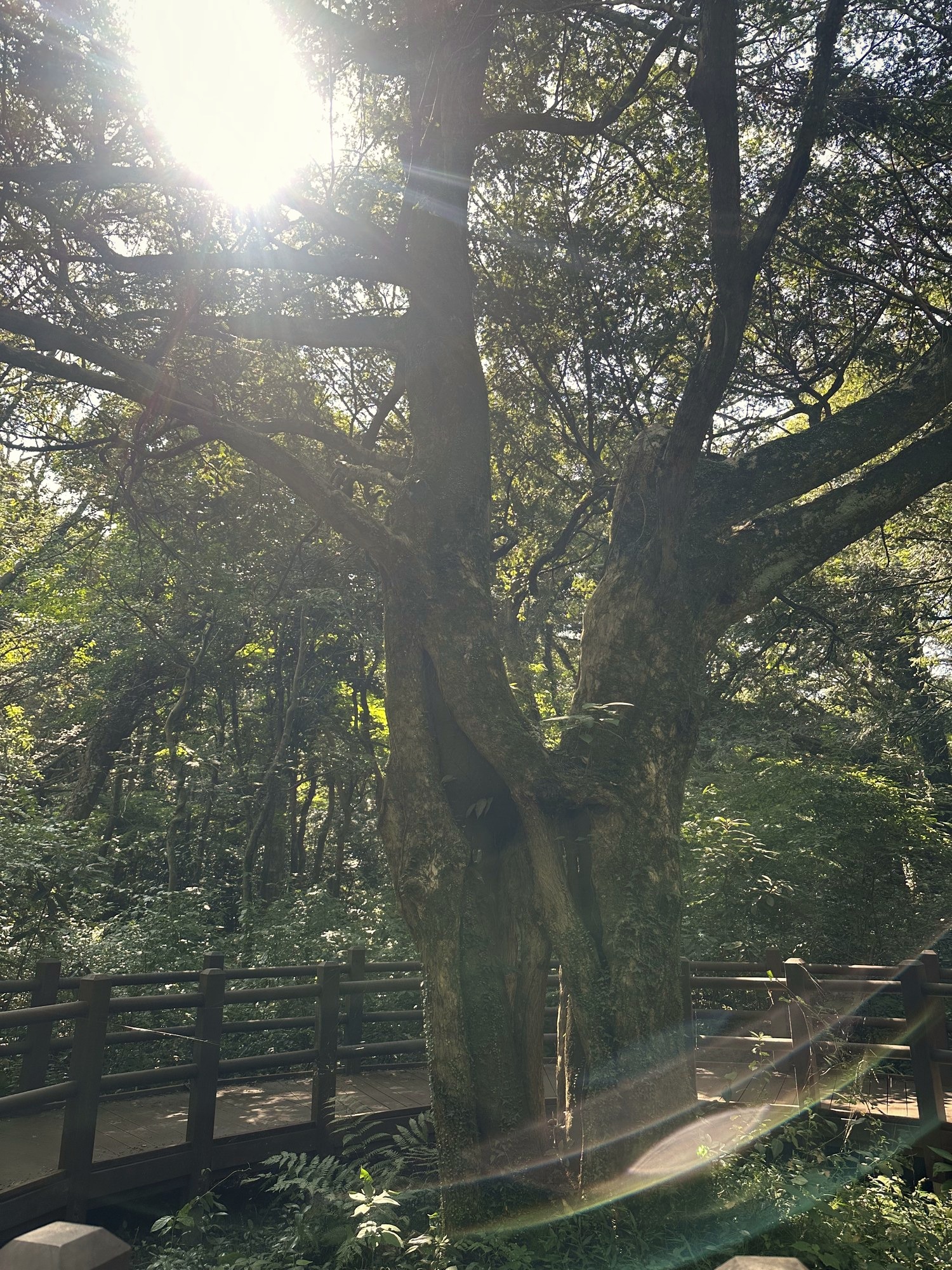
The Korean name is yeonrimok: two trees whose trunks or branches have touched and grown into one. The sign in English calls it the Nutmeg Tree of Love.
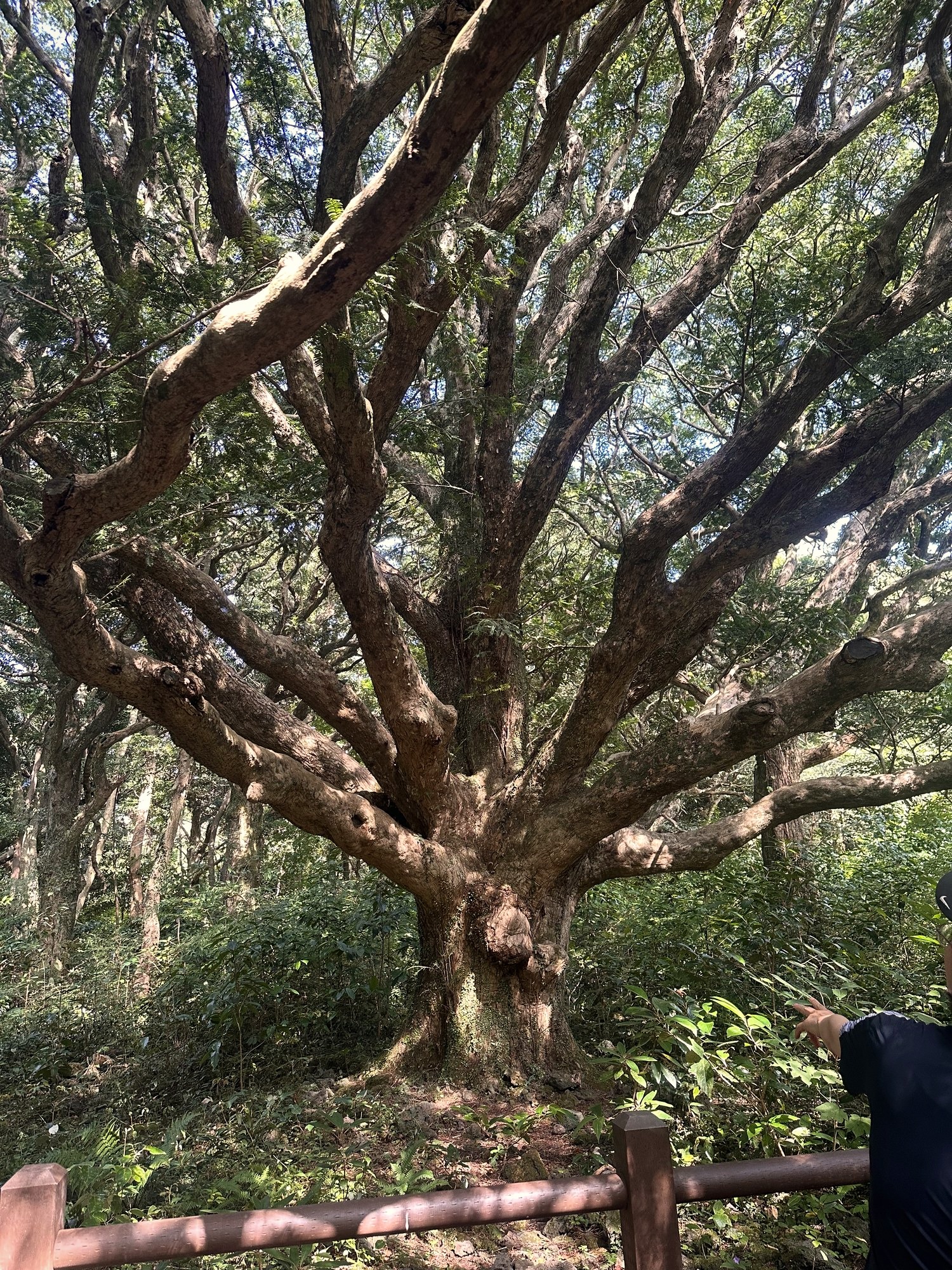
The guide said this "octopus tree" is the oldest tree in the forest. Look for the bump in the middle of the trunk that sticks out like a belly button.
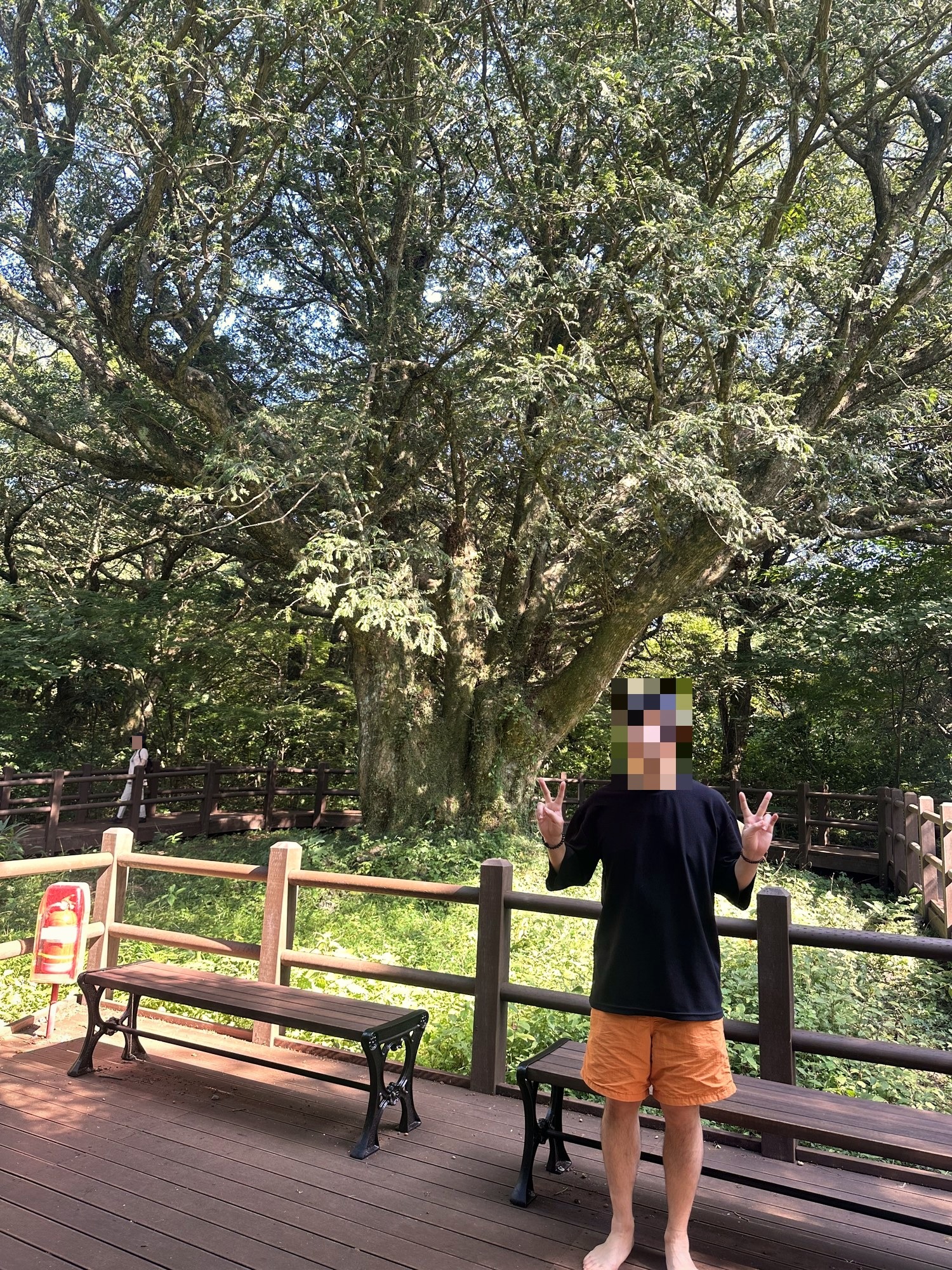
In person, the New Millennium Nutmeg Tree is enormously thick. Its sign gives an age of 813 years, a height of 14 m and a trunk girth of 6 m at chest height. It got its name on January 1, 2000.
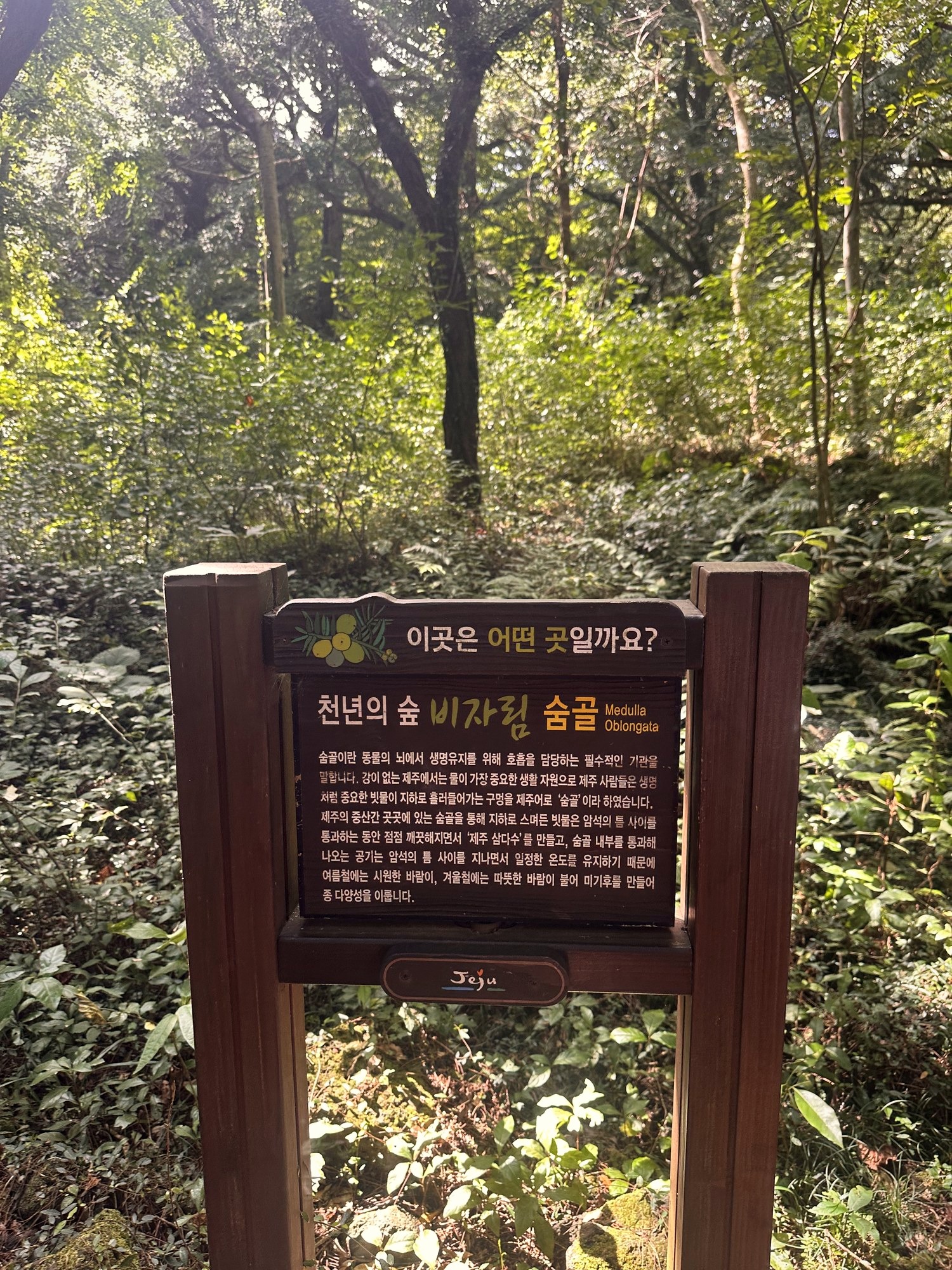
Deeper in, there is a sign for a sumgol. That's the Jeju word for a hole where rainwater drains into the ground.
Two hours, and a place to wash your feet
When we came out at the end of the loop, about 2 hours had passed.
That was because we were barefoot. In shoes, I think about an hour and a half is enough for the whole loop.
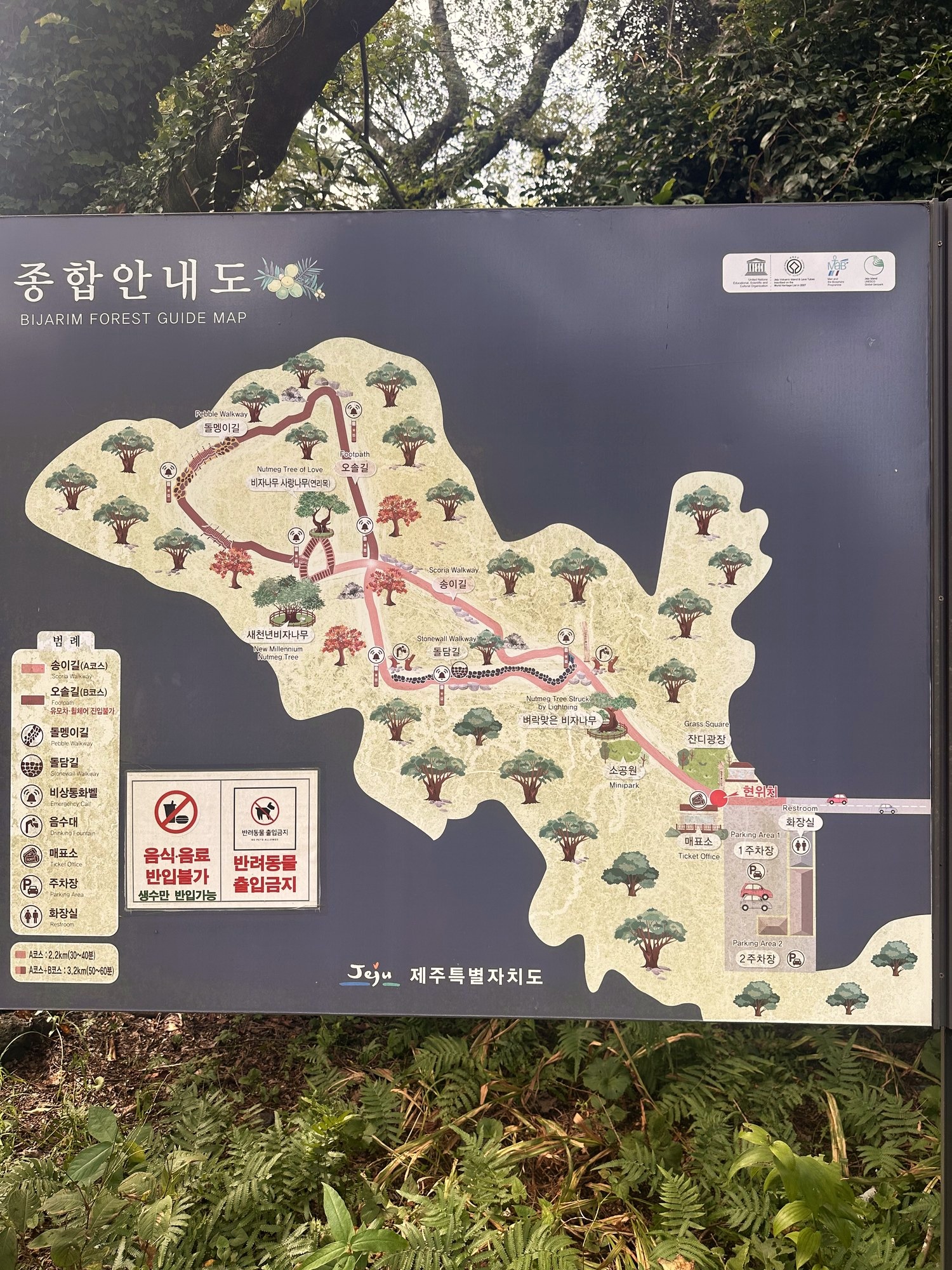
The trail map gives these times:
| Trail | Length | Time on the map | Strollers and wheelchairs |
|---|---|---|---|
| A trail | 2.2 km | 30 to 40 minutes | Yes |
| A + B trail (B is a stony footpath) | 3.2 km | 50 to 60 minutes | Not on the B part |
Our 2 hours was much longer than the map says because we were barefoot.
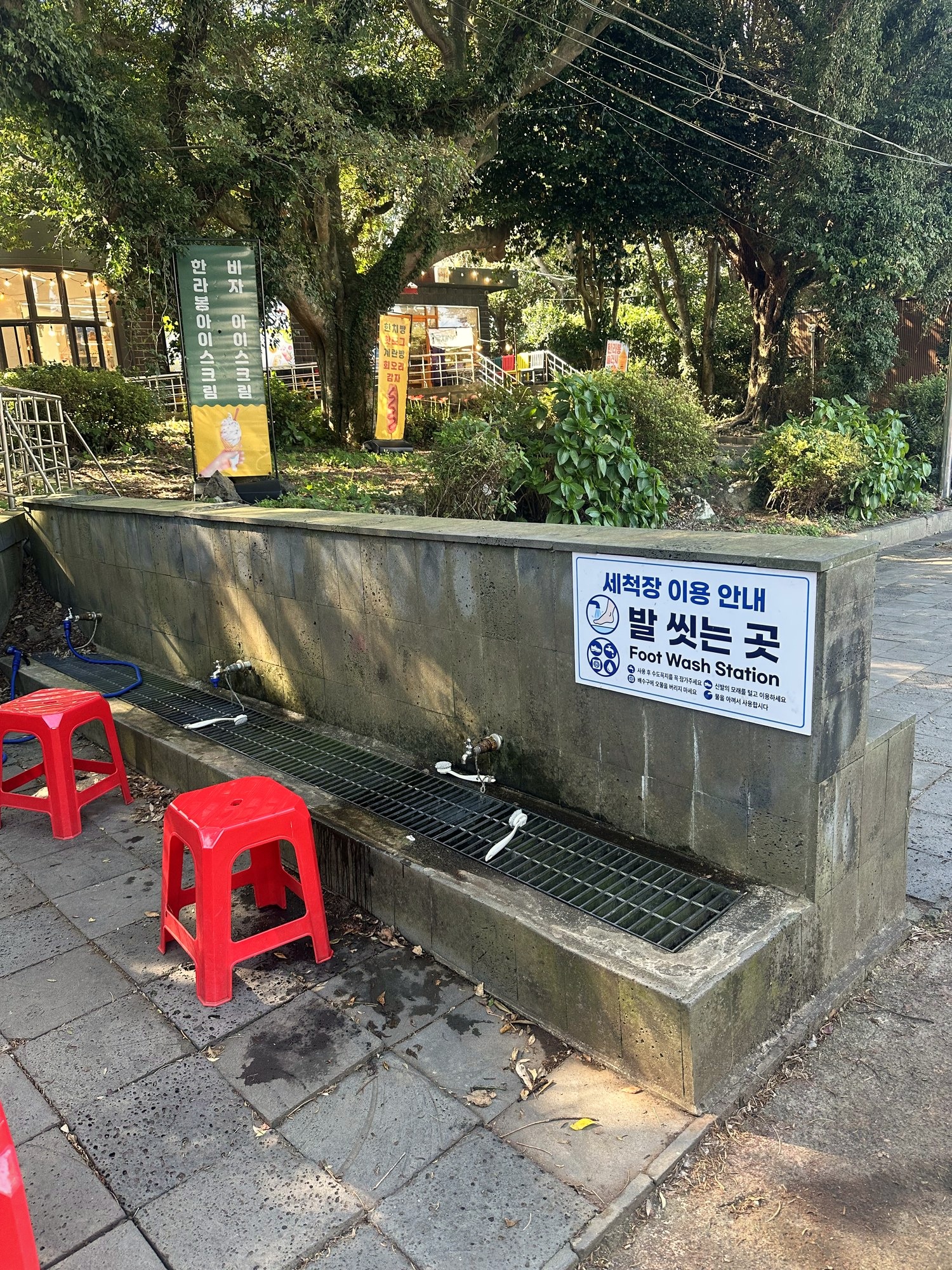
On the way out there is a foot-washing station, so you can wash your feet before putting your shoes back on. A note beside the tap asks you to knock the sand off your shoes first.
From Bijarim we went on to Sonong Road and Abu Oreum. The whole day, with what we spent, is in our Jeju day 2 post.
Before you go
| Our visit | Sunday, September 20, 2026, arrived around 1:10 p.m. |
|---|---|
| Address | 55 Bijasup-gil, Gujwa-eup, Jeju-si |
| Entry fee | Adults 3,000 won; children and teens 1,500 won; we paid 6,000 won for two adults |
| Free entry | Jeju residents, Korean nationals 65+, preschool children and others; use the ticket window |
| Parking | We didn't pay |
| Last entry | 5 p.m.; open every day |
| Time | 2 hours barefoot; about 1.5 hours in shoes; A trail (2.2 km) 40 minutes to 1 hour |
| Rules | No food except bottled water; no pets |
Prices and hours are as of our visit. We paid our own way; nobody sponsored this.
FAQ
How long does it take to walk Bijarim?
It took us 2 hours barefoot on September 20, 2026. In shoes, I think about an hour and a half covers the full loop. The trail map lists the 2.2 km A trail at 30 to 40 minutes and the 3.2 km A + B loop at 50 to 60 minutes.
How much is the entry fee at Bijarim?
3,000 won per adult and 1,500 won for children and teens on our visit. Tickets come from a machine at an unstaffed booth.
Is there parking at Bijarim?
Yes, a large lot at the entrance. We didn't pay to park.
Can you walk Bijarim barefoot?
Many people do, and there is a foot-washing station at the exit. We tried it and found it a mistake: the path has stones and bits of wood, so we ended up watching the ground instead of the forest.
Can you bring a stroller or wheelchair?
The trail map says the A trail is fine for strollers and wheelchairs, but the B trail, a stony footpath, is not.
Source: VisitJeju, Bijarim. Photos are my own. Our Jeju day 1 post covers the day before.


Comments
Post a Comment